Best Essential Oil Set 2026: Top Aromatherapy Kits Worth Buying
The best essential oil sets of 2026 compared on oil quality, variety, value, and safety standards. See why Casida’s German-certified sets lead for serious aromatherapy use.
What Makes a Good Essential Oil Set?
The best essential oil set is not the one with the most bottles. It’s the one where the oils are actually what they claim to be, formulated at meaningful concentrations, and matched to a use case that applies to your life.
Essential oils are one of the most adulteration-prone product categories in natural wellness. The process of producing a true lemon essential oil — cold-pressed from actual lemon peel — is expensive and produces a volatile oil that degrades quickly. The process of producing synthetic lemon fragrance is cheap. Both smell like lemon. Without quality documentation, a buyer can’t distinguish between them.
This guide breaks down what actually separates a quality essential oil set from a cheap one, what to look for before buying, and why Casida’s German pharmacy-registered sets currently lead the market for buyers who take quality seriously.
What Makes a Good Essential Oil Set?
Purity Documentation
The single most important quality factor. Pure essential oils should come with:
GC/MS testing (Gas Chromatography/Mass Spectrometry). This is the industry-standard method for verifying oil composition and identifying adulterants. A quality essential oil brand either performs this testing in-house or provides third-party certificates of analysis.
Batch-level documentation. The certificate should correspond to the specific production batch, not a one-time test done years ago.
Source transparency. Where the plant material was grown, and by what extraction method, affect the chemical composition of the final oil. Lavender grown in Provence has different constituent ratios than lavender grown at lower altitude — both are genuine lavender, but the therapeutic properties differ.
Most budget essential oil brands do not provide batch-level GC/MS certificates. They may claim “100% pure” on the label without documentation to back it up. This is not illegal — it’s just unverifiable.
Extraction Method Appropriateness
Different plant materials require different extraction methods:
| Method | Best For | Notes |
|---|---|---|
| Steam distillation | Leaves, flowers, bark | Most common; appropriate for lavender, eucalyptus, tea tree |
| Cold pressing | Citrus peel | Used for lemon, orange, bergamot; produces the most natural-smelling citrus oils |
| CO2 extraction | Resins, seeds | Produces higher-quality extracts but more expensive |
| Solvent extraction | Delicate flowers | Produces absolutes (not technically EOs); unsuitable for therapeutic use |
A set that cold-presses citrus oils and steam-distills other oils is formulated appropriately. A set that uses the same extraction method for everything is cutting corners somewhere.
Concentration and Dilution Guidance
Essential oils are highly concentrated — most require dilution before skin contact. A quality essential oil set includes:
- Recommended dilution ratios for topical use (typically 1-3% in a carrier oil)
- Maximum safe concentrations for diffuser use
- Safety warnings for specific oils (photosensitivity, contraindications for pregnancy, etc.)
Sets that include zero application guidance are either selling fragrance oils (not therapeutic EOs) or are being irresponsible about safety.
Variety and Completeness
A well-designed starter set covers the high-utility core oils — the ones with the broadest evidence base for aromatherapy use:
- Lavender — sleep, relaxation, general calming
- Eucalyptus — respiratory support, clearing, focus
- Peppermint — energy, focus, headache support
- Tea tree — antimicrobial, skin support
- Lemon/citrus — mood lifting, diffuser freshness
- Rosemary — focus, circulation, hair health
Any best essential oil set for a beginner should include at least 4 of these 6. Collections that lead with exotic or specialty oils are often marketing-driven rather than practically useful for new aromatherapy users.
Casida TOP 6 Sets: The German Standard for Home Aromatherapy
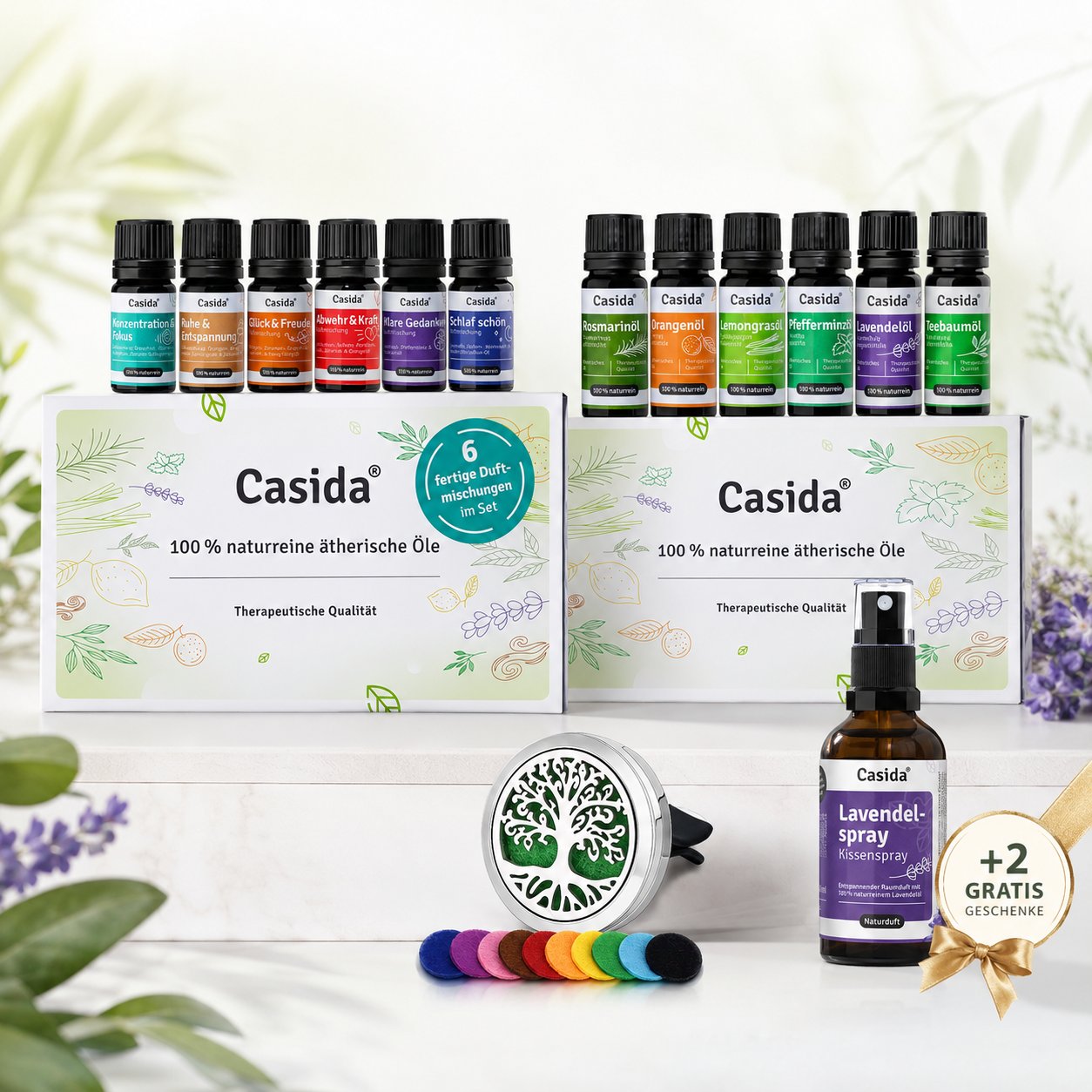
Casida’s essential oil lineup addresses the quality documentation gap that makes most of the essential oil market difficult to trust.
TOP 6 Ätherische Öle Set (€37.95, normally €59.49 — 36% off)
This set contains the six most practical single-note essential oils for at-home aromatherapy. The exact composition covers the high-utility core oils — lavender, eucalyptus, peppermint, tea tree, rosemary, and a citrus — in concentrations appropriate for diffuser use and diluted topical application.
Why Casida leads this category:
Casida products are sold through German pharmacies and carry PZN (Pharmazentralnummer) registration — the German pharmacy product identification system. This registration requires documented formulation, which creates accountability that online-only brands don’t face. The same regulatory framework that applies to German OTC medications applies to Casida’s registered products.
The practical implication: the oils in a Casida set are formulated to the standards required to appear in German pharmacy systems. Adulteration, underdosing, or mislabeling would expose the products to removal from pharmacy databases. This creates a quality floor that exists independently of Casida’s own marketing.
Value assessment: At €37.95 for 6 oils (€6.33 per oil), this is mid-range for genuine quality essential oils — less expensive than high-end MLM brands (doTERRA, Young Living) while matching or exceeding their quality documentation standards.
TOP 6 Duftmischungen Set (€34.99, normally €59.40 — 41% off)
The Duftmischungen set contains pre-formulated blends rather than single-note oils. This is the right format for people who:
- Want specific mood or functional effects (sleep blend, energy blend, relaxation blend)
- Don’t want to research blending ratios for safe combination
- Use a diffuser as their primary application method
Casida’s fragrance blends are formulated with the same documentation standards as their single oils — the composition is documented, not a proprietary mystery blend. The 41% discount on the set (vs. purchasing the blends individually) makes this the best value entry point to Casida’s line.
The Combined Super-Set Offer
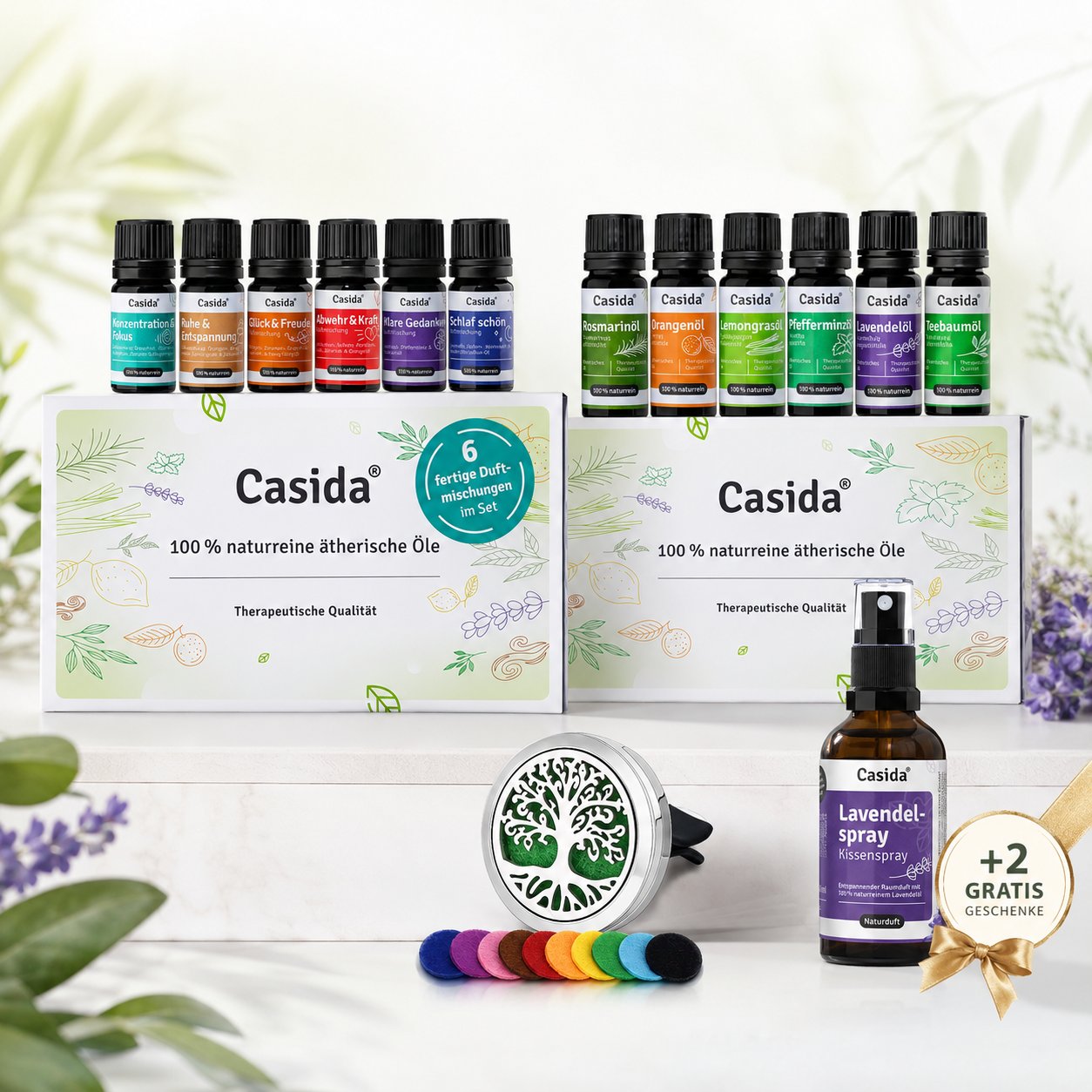
Casida also offers a combined TOP 6 Duftmischungen + TOP 6 Ätherische Öle set with bonus gifts. This is the format to buy if you’re setting up a full aromatherapy practice — it provides both the flexibility of single oils and the convenience of pre-formulated blends in one purchase.
How to Use Essential Oils: A Practical Guide for Beginners
Owning a quality essential oil set only helps if you use the oils correctly. The three main application methods:
Diffuser (Most Common)
Add 3 to 10 drops of essential oil per 100ml of water in an ultrasonic diffuser. Run for 30 to 60 minutes per session — continuous diffusion is not recommended because your olfactory receptors habituate (stop perceiving the scent) and you may over-expose yourself to compounds that are beneficial at moderate levels.
Good diffuser blends to start:
– Sleep: 3 drops lavender + 2 drops chamomile (or Roman chamomile blend)
– Focus: 3 drops peppermint + 2 drops rosemary + 2 drops eucalyptus
– Relaxation: 3 drops lavender + 2 drops bergamot + 1 drop ylang ylang
Topical (Diluted)
Never apply essential oils undiluted to skin (except lavender and tea tree in very small spot applications). Dilute to 1-3% in a carrier oil:
- 1% = 6 drops per 30ml carrier oil (good for face, sensitive areas)
- 2% = 12 drops per 30ml carrier oil (standard for body massage)
- 3% = 18 drops per 30ml carrier oil (short-term use for specific concerns)
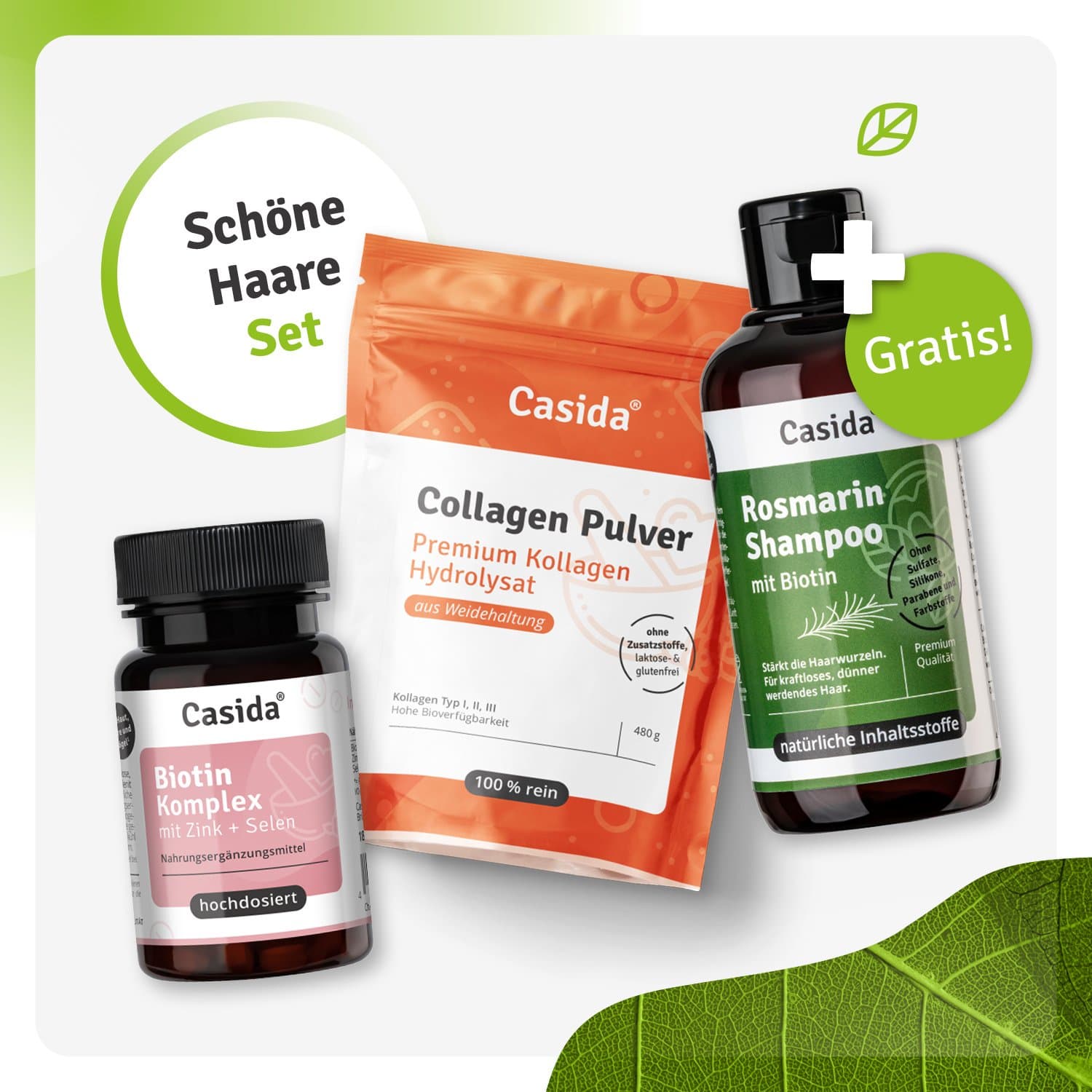
Common carrier oils: jojoba, sweet almond, fractionated coconut. Casida’s rosemary hair products are pre-formulated at appropriate concentrations, eliminating this calculation step.
Inhalation (Steam or Direct)
Add 2 to 3 drops to a bowl of hot water, tent a towel over your head, inhale for 5 to 10 minutes. Effective for respiratory support (eucalyptus, peppermint) and sinus congestion.
Direct inhalation from the bottle or a cotton ball is effective for quick mood support — don’t hold the bottle directly under your nose, hold it 5 to 10cm away.
Essential Oil Safety: What to Know Before Using
Essential oils are generally safe when used as directed. Key safety points:
Photosensitive oils. Cold-pressed citrus oils (bergamot, lemon, orange, grapefruit, lime) contain furanocoumarins that increase UV sensitivity. Don’t apply to skin that will be exposed to direct sunlight for several hours after use. Steam-distilled citrus oils are less photosensitive; the product description should specify which type.
Pregnancy. Several essential oils are contraindicated during pregnancy, particularly in the first trimester — clary sage, rosemary (high dose), fennel, thyme. If pregnant, consult a healthcare provider before using essential oils topically or internally.
Children and pets. Dilution requirements are more conservative for children. Cats are particularly sensitive to phenols found in tea tree and eucalyptus — diffuse these cautiously in households with cats.
Oral use. Only specific essential oils are safe for consumption, and only those specifically labeled and formulated for oral use. Casida clearly labels products by application method. Do not use diffuser-grade oils internally.
Maintaining Your Essential Oil Collection
Quality essential oils degrade with exposure to heat, light, and oxygen. To maximize shelf life:
- Store in dark glass bottles (all Casida oils come appropriately packaged)
- Keep away from heat sources — not in bathrooms
- Seal tightly after each use
- Most essential oils are stable for 1 to 3 years; citrus oils expire faster (1 to 2 years)
A quality essential oil set like Casida’s TOP 6 is a 1 to 3 year investment in a home aromatherapy practice — not a consumable that needs frequent replacement.
The Investment Case
A complete Casida aromatherapy setup:
– TOP 6 Ätherische Öle Set: €37.95
– Ultrasonic diffuser (not Casida, but any quality 100-300ml model): €20 to €40
– Carrier oil for topical use (jojoba or sweet almond, 100ml): €8 to €15
Total startup: €66 to €93 for a complete at-home aromatherapy practice that covers sleep support, focus, relaxation, and hair care.
For comparison: a single aromatherapy spa session in Germany runs €40 to €80. The home setup pays for itself in 2 to 3 sessions that you would have booked at a spa.
Recommended for you
 Best Ceramide Moisturizer Under $30: K-Beauty Picks That Outperform Luxury Brands
 Haruharu Wonder Review: The K-Beauty Brand That Strips Skincare Back to Basics
 Haruharu Wonder Ceramide Cream Review: K-Beauty’s Best $24 Pick?
 Best Men’s Hair Clay 2026: Which Formulas Actually Hold Without Crunch?
 Who Is Elijah Matt Clay: Is This Barber-Origin Formula Worth 28 Euros?
 Who Is Elijah Review: The Best Matt Clay and Cologne for Men 2026