How to Use Powder Shampoo in 3 Steps (and Why Your Hair Will Thank You)
Learn how to use powder shampoo the right way. Our 3-step guide covers lathering, rinsing, and the transition period — so you get great results from day one.
What Makes Powder Shampoo Different to Use
- What Makes Powder Shampoo Different to Use
- How to Use Powder Shampoo: The 3-Step Method
- The Transition Period: What to Expect Week by Week
- How to Use Powder Shampoo on Different Hair Types
- How to Store Powder Shampoo
- Common Mistakes When Using Powder Shampoo
- Where to Buy The Powder Shampoo
- FAQ: How to Use Powder Shampoo
- The Bottom Line
Knowing how to use powder shampoo correctly makes the difference between a disappointing first wash and a routine you’ll stick with for years. Most people who try powder shampoo and quit in week one are making the same two mistakes: using too much product and expecting the same foam experience as a liquid shampoo. This guide fixes both.
We’ll walk through the exact three-step technique, cover what to expect during the transition period, and share the small adjustments that make powder shampoo work for every hair type — including fine, thick, color-treated, and curly hair.
What Makes Powder Shampoo Different to Use
Before the steps, it’s worth understanding one key difference. Traditional liquid shampoo is 80–90% water. When you apply it, the water activates immediately and creates foam on contact. Powder shampoo contains no water — only concentrated cleansing agents, scalp botanicals, and conditioning ingredients. The activation happens when you combine the powder with the water already in your wet hair.
This means two things:
1. Your hair needs to be properly wet before you apply the powder
2. The lather will be lighter and less voluminous than liquid shampoo — and that’s completely normal
A light lather doesn’t mean less clean. The surfactants in powder shampoo are doing the same job as their liquid counterparts, just without the water volume amplifying the foam. Once you understand this, the experience makes sense immediately.
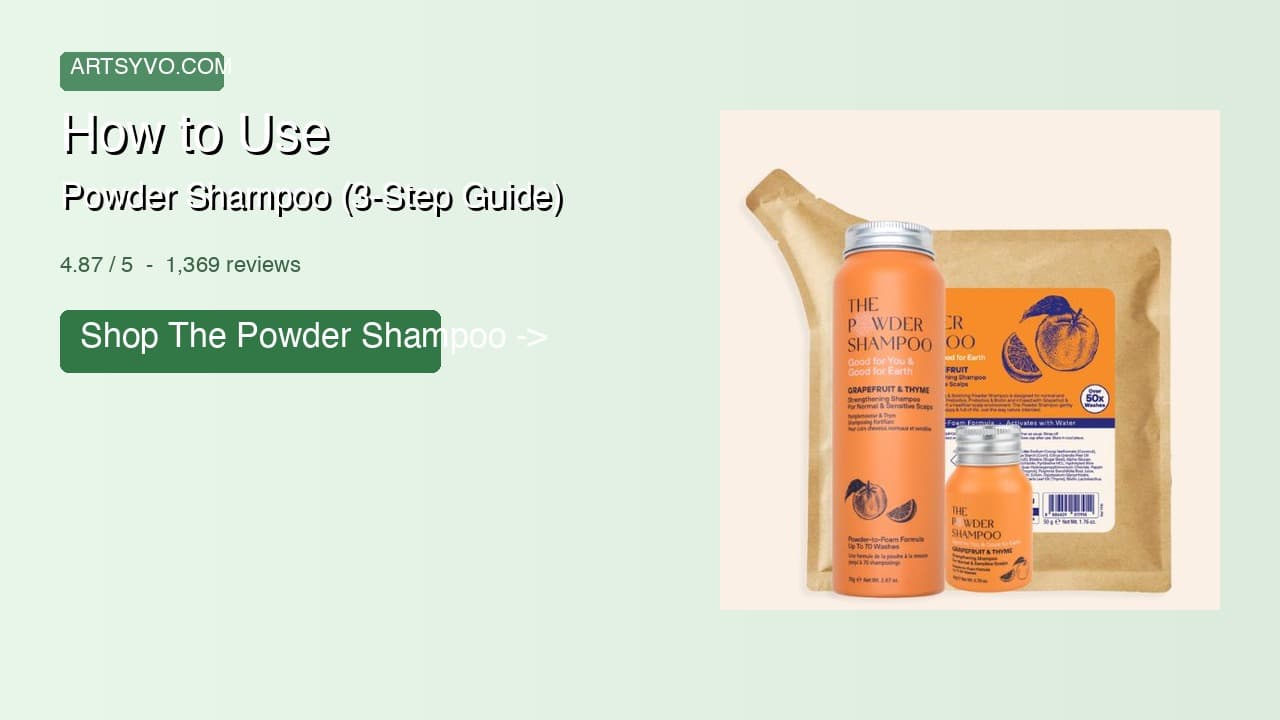
The Powder Shampoo, rated 4.87 out of 5 by 1,369 verified buyers, is one of the most reviewed powder shampoo brands available in 2026. Their technique recommendations — which we’ve expanded here — apply equally to their five shampoo formulas and to most powder shampoo products from other brands.
How to Use Powder Shampoo: The 3-Step Method
Step 1: Activate the Powder (Wet Your Hair First)
The most common mistake with powder shampoo is applying it to damp hair rather than soaking-wet hair. The activation requires a generous amount of water.
Stand under the shower for at least 60 seconds and thoroughly saturate your hair from root to tip. Run your fingers through to the scalp to make sure no dry patches remain. Your hair should be so wet that water is dripping steadily from the ends.
Once your hair is fully saturated, measure your powder. The standard amount is approximately half a teaspoon (0.3–0.4g) for short to medium-length hair. If your hair is long or thick, use up to three-quarters of a teaspoon. Do not use a full teaspoon unless your hair is very long and very thick — one of the most common errors is using too much powder, which makes rinsing harder without improving the cleanse.
Sprinkle the powder directly onto the scalp, not the lengths. Focus on the crown and the areas around the hairline, behind the ears, and at the nape of the neck — the places where oil accumulates.
Step 2: Build the Lather (Massage Technique)
Immediately after applying the powder, use your fingertips (not your nails) to massage the scalp with circular motions. Apply gentle but consistent pressure and work methodically from the front hairline toward the crown, then to the sides, and finally the nape.
The powder will begin foaming within 10–15 seconds of contact with the water in your hair. Continue massaging for 60–90 seconds. The foam won’t look like the billowing suds of a liquid shampoo — it will be lighter and more translucent — but it will spread across the entire scalp as you work it in.
At around the 60-second mark, add a small amount of water directly to your hands and work it into the scalp area you’ve been massaging. This activates any remaining powder that hasn’t been reached and evens out the lather. Then run your foam-covered hands down the lengths of your hair to clean them as well.
Do not scrub. Circular fingertip massage is more effective and far gentler on the scalp and hair shaft than aggressive scrubbing.
Step 3: Activate the Powder (Wet Your Hair First)
Rinse with warm water (not hot — hot water opens the cuticle and can cause more frizz) until the water runs completely clear. With powder shampoo, this typically takes less time than a liquid formula because there are no silicones or heavy conditioners to remove.
Check the roots by running your fingers through the scalp after rinsing. If the hair feels “squeaky clean” — that slightly squeaky sensation when wet — you’ve rinsed completely. If it feels slippery or leaves residue on your fingertips, continue rinsing for another 15–20 seconds.
Follow with your usual conditioner, focusing on the mid-lengths and ends. The Powder Shampoo also offers a Hydrating Volume Conditioner (fine/dry/thinning, SGD $19.90) and a Nourishing Repair Conditioner (damaged/frizzy) in the same refillable aluminium bottle system.
The Transition Period: What to Expect Week by Week
If you’ve been using sulfate-heavy liquid shampoos for years, your scalp has adjusted to frequent stripping by producing more sebum. When you switch to a gentler formula — whether powder or any other low-sulfate shampoo — there’s a recalibration period of two to four weeks.
Week 1: Hair may feel slightly different after drying. Some people notice it dries faster; some notice slightly more volume. Oil production may feel unchanged.
Week 2: This is often the hardest week. Scalp oil may seem slightly higher as sebum production hasn’t yet downregulated. This is temporary and normal. Do not switch back to your old shampoo during this period — you’ll reset the clock.
Week 3: Oil production begins to slow. Most people find they can extend their wash cycle by one day compared to their pre-switch routine.
Week 4 onward: Wash frequency settles at a new, lower rhythm for most users. The majority of The Powder Shampoo’s verified reviewers describe this as the point at which the product “clicked” for them.
Tips for getting through the transition:
– If week two is difficult, use a light dry shampoo on days between washes
– Don’t increase the powder amount thinking more product equals faster results
– Stick to the same wash frequency as before — the transition happens through consistent use, not more frequent washing
How to Use Powder Shampoo on Different Hair Types
Fine Hair
Fine hair benefits the most from powder shampoo. The lightweight formula adds volume without the silicone buildup that liquid shampoos often leave behind. Use the standard half-teaspoon amount and choose the Invigorating (Bergamot) or Strengthening (Grapefruit) formula. Avoid the Hydrating formula if your hair is fine — it may be slightly too rich.
Thick or Coarse Hair
Use closer to three-quarters of a teaspoon per wash, and ensure extra-thorough saturation before applying. The Hydrating (Camellia) formula works well for coarse hair. You may also benefit from the Year Supply format — at SGD $89.60 for 320 washes (down from $119.40), it’s the most economical option for heavy users.
Color-Treated Hair
Powder shampoo is generally very well-tolerated by color-treated hair because it contains no sulfates (which are the primary cause of color fade in liquid shampoos). Use the Strengthening or Hydrating formula. Avoid the Exfoliating formula while hair is freshly colored, as the Tea Tree may be slightly too active on a freshly processed scalp.
Curly or Coily Hair
The Hydrating formula is the most appropriate for curly hair. Apply the powder in sections (parting hair into four sections and applying to each scalp section separately) to ensure even coverage across a denser hair structure. Follow with a rich conditioner to maintain curl definition.
How to Store Powder Shampoo
Powder shampoo has one significant advantage over liquid: it has no water to go rancid, no preservatives that can degrade, and no bacteria that can grow in a water-based formula. An unopened pouch has a much longer shelf life than liquid shampoo.
Keep the powder pouch dry between uses. The compostable paper pouches used by The Powder Shampoo are sealed with a resealable strip — fold and press firmly after each use to prevent moisture from entering. Store the aluminium bottle (with lid closed) in a dry area of your bathroom, away from direct shower spray.
If any powder clumps form due to humidity exposure, break them up by shaking the container. Clumps don’t affect the product’s efficacy — they just mean you need to measure a bit more carefully.
Common Mistakes When Using Powder Shampoo
Using too much. Half a teaspoon is almost always sufficient. More powder doesn’t mean a better cleanse — it means more rinsing time and potential scalp buildup.
Not wetting hair enough. Dry or damp hair doesn’t activate powder shampoo properly. Saturate thoroughly before applying.
Expecting liquid-shampoo lather. The foam will be lighter. This is by design. Judge results by how clean your scalp and hair feel after rinsing, not by how much foam you see.
Giving up too early. Week two of the transition is the hardest. Almost every verified reviewer who reports long-term satisfaction pushed through it. Week four is where the actual results show up.
Applying to the lengths first. Always apply to the scalp, then work down. The scalp needs cleansing; the lengths get cleaned by product running down during rinse.
Where to Buy The Powder Shampoo
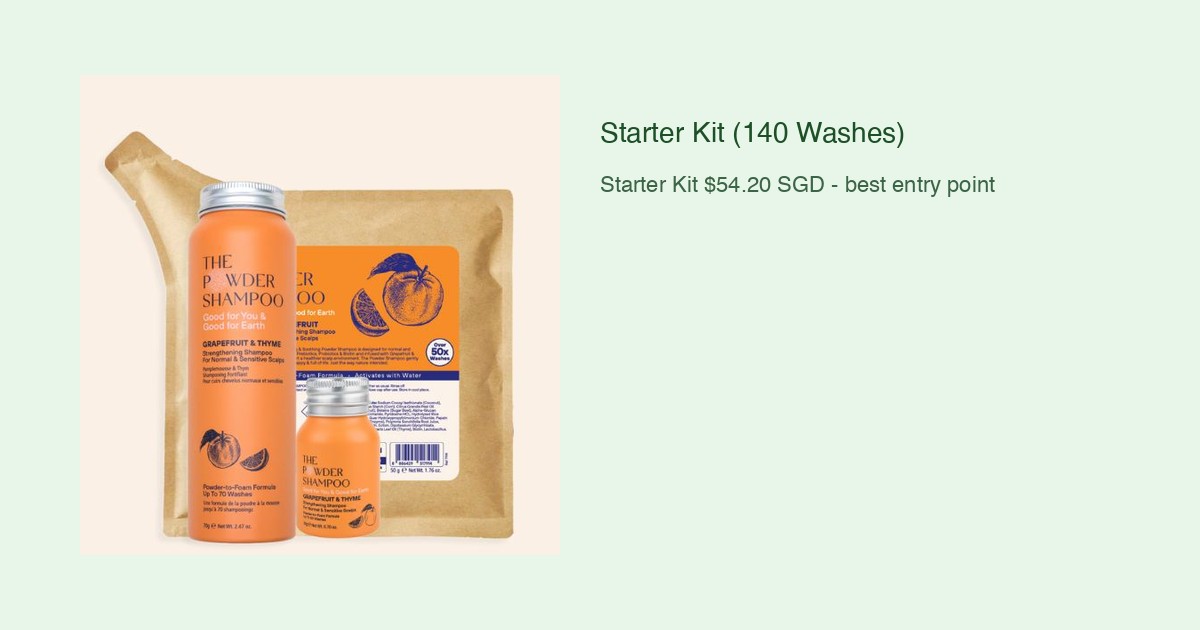
The Powder Shampoo ships directly to international customers from Singapore. If you’re new to the product, the Starter Kit (SGD $54.20 for 140 washes, reduced from $63.70) gives you enough product to complete the full transition period and several weeks beyond, which is the minimum time needed to see lasting results.
The Year Supply (320 washes, SGD $89.60) saves 25% compared to buying pouches individually and is the most practical format for committed users.
FAQ: How to Use Powder Shampoo
Can I use powder shampoo without a bottle?
Yes. Many people apply powder shampoo directly from the paper pouch into their palm, then onto the scalp. The refillable aluminium bottle from The Powder Shampoo is optional but makes measuring easier and is more sustainable long-term.
How do I know if I’m using the right amount?
After rinsing, your hair should feel clean and not slippery. If it feels slippery (residue), use slightly less product or rinse longer. If your scalp doesn’t feel clean, use slightly more.
Can I use powder shampoo every day?
You can, but most people find that the balanced scalp oil cycle that develops over four weeks makes daily washing unnecessary. Every two to three days is the typical rhythm for regular users.
Does powder shampoo expire?
Opened pouches are best used within 12 months. Unopened pouches have a longer shelf life than liquid shampoo because there is no water content to support microbial growth.
Can children use The Powder Shampoo?
The Strengthening formula (Grapefruit) is the mildest option and appropriate for older children. Always do a patch test first. The brand’s site has a customer service channel for specific sensitivity questions.
The Bottom Line
Learning how to use powder shampoo correctly takes one or two washes to calibrate — but once you have the technique, it’s faster and cleaner than liquid shampoo. The three-step method (wet thoroughly, apply to scalp, massage and rinse) is simple, the transition period is manageable with the right expectations, and the long-term results — balanced scalp, extended wash cycle, and genuinely plastic-free routine — are real.
The Powder Shampoo is the most thoroughly reviewed option in the powder shampoo category as of 2026, with 1,369 verified reviews at 4.87 out of 5 to back it up.
See also: Powder Shampoo 2026: Why It’s Replacing Liquid Shampoo and The Powder Shampoo Review: 30 Days of Testing
Recommended for you
 Best Ceramide Moisturizer Under $30: K-Beauty Picks That Outperform Luxury Brands
 Haruharu Wonder Review: The K-Beauty Brand That Strips Skincare Back to Basics
 Haruharu Wonder Ceramide Cream Review: K-Beauty’s Best $24 Pick?
 Best Men’s Hair Clay 2026: Which Formulas Actually Hold Without Crunch?
 Who Is Elijah Matt Clay: Is This Barber-Origin Formula Worth 28 Euros?
 Who Is Elijah Review: The Best Matt Clay and Cologne for Men 2026