LED Face Mask vs IPL: Which At-Home Beauty Device Is Right for You?
LED face mask vs IPL: what each does, what they don’t do, and which one makes sense for your specific skin goals. Dermeren devices used as reference throughout.
The Core Distinction Before Everything Else
- The Core Distinction Before Everything Else
- LED Face Masks: What Light Therapy Actually Does to Skin
- LED Therapy Evidence: What the Research Shows
- IPL Devices: Permanent Hair Reduction and Skin Rejuvenation
- IPL Devices: The Skin Tone Constraint
- Side-by-Side: LED vs IPL for Common Concerns
- The Combination Approach
- Making the Decision
The LED face mask vs IPL question comes up constantly in at-home beauty device conversations, and it comes up because many buyers don’t fully understand that these are not competing technologies — they address fundamentally different concerns. Confusing them leads to buying the wrong device, disappointing results, and eventually writing off an entire category of technology that might have worked perfectly if applied correctly.
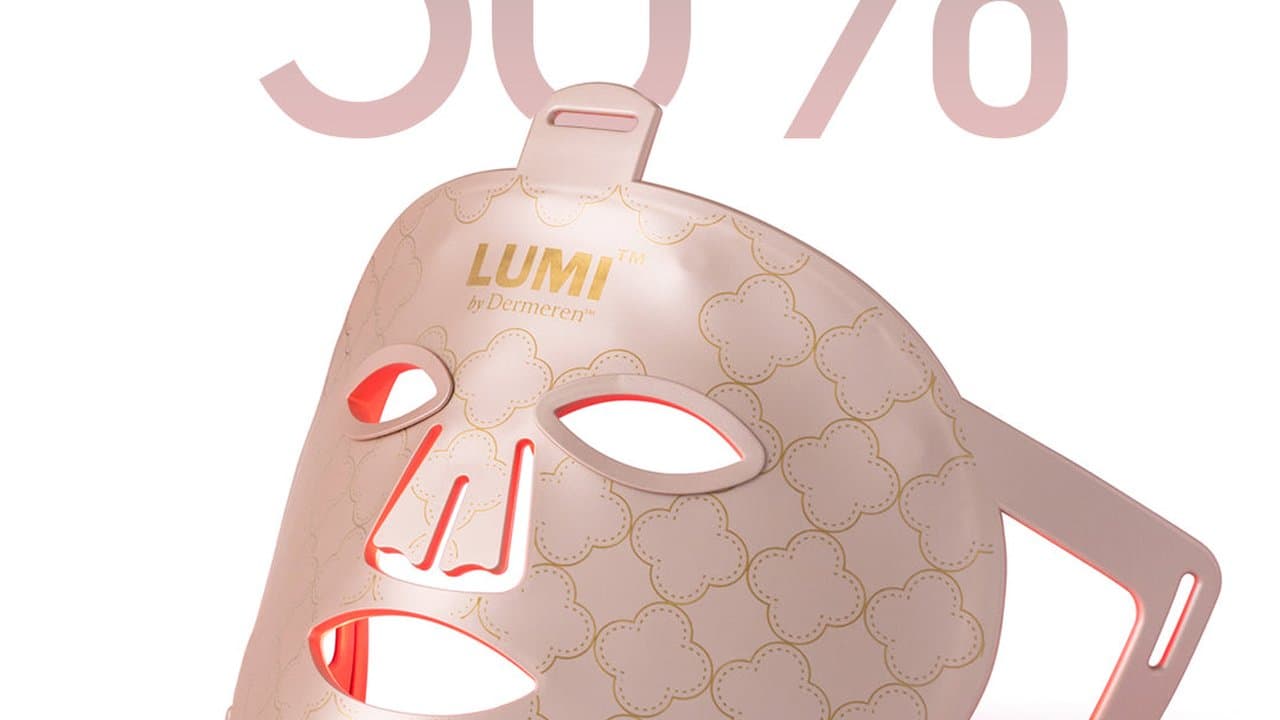
This guide covers what each technology does, what the evidence says, which skin concerns each addresses, and how to choose between them using Dermeren’s LUMI Quadra and Expert Pro IPL Elevate as concrete reference points.
The Core Distinction Before Everything Else
LED face mask: Photobiomodulation — low-level light therapy that triggers cellular responses in skin tissue. Does not damage tissue. Does not produce heat at the skin surface. Used for: anti-aging, acne, redness, inflammation, recovery.
IPL device: Intense Pulsed Light — high-intensity broad-spectrum light that targets melanin in hair follicles (or occasionally melanin in pigmented spots). Does produce heat at tissue level, which is the mechanism for follicle damage and hair reduction. Used for: permanent hair reduction, and sometimes superficial pigmentation.
These two technologies don’t do the same thing. Buying an IPL device expecting LED therapy benefits won’t work. Buying an LED mask expecting hair removal won’t work. The question “which is right for you?” depends entirely on what problem you’re solving.
LED Face Masks: What Light Therapy Actually Does to Skin
The mechanism of LED light therapy (photobiomodulation) is well-documented in scientific literature. At the cellular level:
Red light (630-660nm): Absorbed by cytochrome c oxidase in mitochondria, increasing cellular energy production (ATP). Enhanced cellular energy supports fibroblast activity — fibroblasts produce collagen and elastin. The visible result over 8-12 weeks of consistent use: improved skin firmness, reduced fine line depth, and more even tone.
Near-infrared (800-850nm): Deeper penetration than visible red. The same mitochondrial mechanism but with anti-inflammatory effects and improved circulation. Supports collagen production at deeper tissue levels.
Blue light (415-430nm): Absorbed by porphyrins in Propionibacterium acnes bacteria. The light reaction destroys the bacteria, reducing the primary bacterial driver of inflammatory acne.
Yellow/amber (570-590nm): Reduces vascular redness, supports healing of dilated capillaries, appropriate for rosacea and post-treatment recovery.
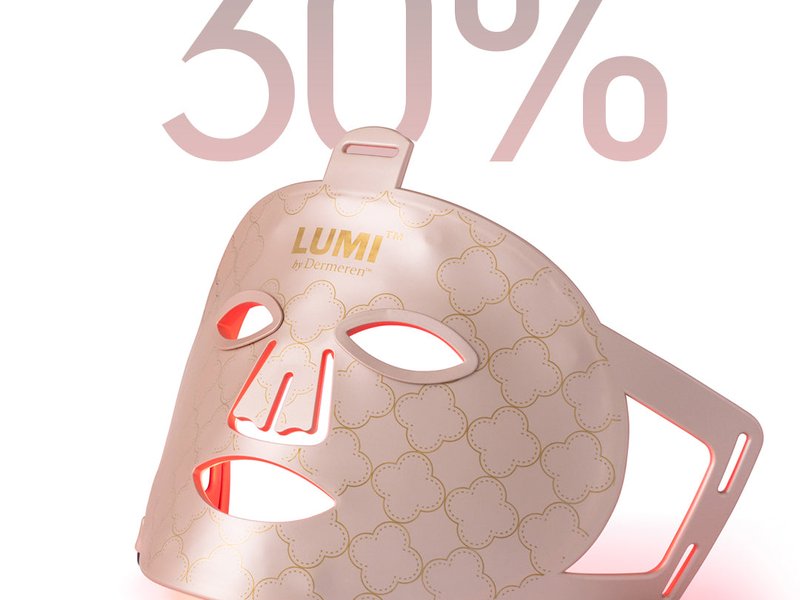
The Dermeren LUMI Quadra uses all four wavelengths simultaneously. This is meaningful: most entry-level LED masks offer only red and blue. Quadra coverage addresses aging, acne, and redness concerns in the same session without requiring separate devices or sessions.
At $392 in the EOFY sale (was $560), the LUMI is positioned as a high-specification home LED device rather than a budget option.
LED Therapy Evidence: What the Research Shows
The evidence base for LED photobiomodulation is substantive compared to many aesthetic treatments. Key findings:
Collagen stimulation: Multiple controlled studies demonstrate measurable increases in collagen density after consistent LED therapy. A 2014 Journal of Photochemistry and Photobiology study found significant improvement in skin roughness and elasticity after 30 sessions of red LED.
Acne: Blue LED at appropriate fluence levels reduces P. acnes bacterial counts and inflammatory acne lesions. The effect is weaker than topical retinoids or antibiotics for severe acne but meaningful for mild to moderate cases.
Anti-inflammatory: Near-infrared particularly demonstrates anti-inflammatory cytokine modulation in multiple models. Relevant for acne, rosacea, and post-procedure recovery.
Limitations: Most studies use professional-grade devices. Home devices operate at lower irradiance levels, so the timelines for visible results are longer. “Clinical-grade home devices” like the LUMI aim to close this gap.
IPL Devices: Permanent Hair Reduction and Skin Rejuvenation
IPL (Intense Pulsed Light) works through selective photothermolysis: the device emits intense pulses of broad-spectrum light that are absorbed by melanin. In hair removal applications, the melanin in the hair follicle absorbs the energy, which converts to heat. The heat damages or destroys the follicle, interrupting the hair growth cycle.
Why “reduction” rather than “removal”: hair grows in cycles, and IPL only affects follicles in the active growth phase (anagen). A single treatment session affects only the follicles currently in anagen. Multiple treatments (typically 8-12) over several months, spaced to catch follicles in different growth phases, produce cumulative reduction of 70-90% in most treated areas.
IPL also has skin applications beyond hair removal: selective photothermolysis can target superficial melanin in age spots or sun damage, producing a lightening effect. Some IPL devices also have skin rejuvenation modes using lower intensity settings. However, IPL’s primary application and the one with the most consistent evidence base is hair removal.
IPL Devices: The Skin Tone Constraint
Traditional IPL requires contrast between hair color and skin tone. The device targets melanin — if the surrounding skin also has high melanin content (darker skin tones), the risk of heat absorption in the skin rather than the follicle increases, with potential for burns or pigmentation changes.
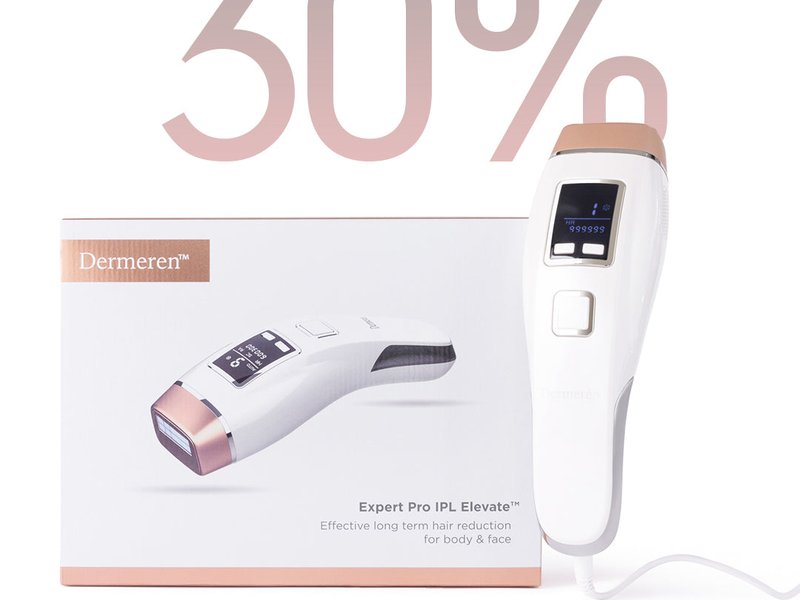
Most professional and home IPL devices are validated for skin tones up to a specific point on the Fitzpatrick scale (a 1-6 scale of skin phototype). The Dermeren Expert Pro IPL Elevate at $482 (EOFY sale, was $689) should be assessed for its Fitzpatrick compatibility before purchase if you have medium to darker skin tones.
For individuals with lighter skin tones and darker hair (the highest melanin contrast combination), IPL produces the most consistent results.
Side-by-Side: LED vs IPL for Common Concerns
| Concern | LED Face Mask | IPL Device |
|---|---|---|
| Fine lines and wrinkles | Yes — collagen stimulation | No |
| Acne | Yes — blue light bacterial reduction | No |
| Facial redness / rosacea | Yes — yellow/NIR wavelengths | No (can worsen if misused) |
| Age spots / pigmentation | Limited — NIR has minor effect | Yes — selective photothermolysis |
| Body hair removal | No | Yes |
| Facial hair removal | No | Yes (with appropriate skin/hair type) |
| Skin firmness | Yes — long-term collagen building | Limited |
| Recovery after procedures | Yes — NIR anti-inflammatory | No |
The Combination Approach
For buyers with multiple goals — both skin concerns and hair removal — the combination approach makes more sense than choosing one technology. The LUMI Quadra and Expert Pro IPL Elevate are complementary, not redundant.
Dermeren’s EOFY sale makes this more accessible: both devices at EOFY pricing represent a combined $874 vs. $1,249 at standard pricing — a $375 saving on the combination. The Lift and Repair Bundle ($597, was $1,087) is a different combination (LUMI + Aura Sculpt), but the principle of bundling for savings applies throughout the range.
Making the Decision
Buy the LUMI LED mask if:
– Primary concern is skin aging, firmness, or collagen improvement
– Dealing with inflammatory or persistent acne
– Rosacea, redness, or chronic skin inflammation
– Already paying for professional LED treatments you want to replicate at home
Buy the Expert Pro IPL if:
– Primary goal is permanent hair reduction in any body area
– You have appropriate skin/hair tone contrast for IPL
– Currently paying for professional IPL or laser sessions
– Interested in superficial pigmentation (sun spots, age spots) treatment
Buy both if:
– You have skincare concerns AND hair removal goals
– EOFY pricing creates the right window for a two-device purchase
Buy neither if:
– You haven’t yet tried any LED or IPL treatment and are unsure of your response (professional consultation first may be valuable)
– You have photosensitivity conditions or are on photosensitizing medications (contraindication for both)
The Dermeren EOFY sale is the right window for both devices if Australian timing works for your purchase. Free shipping on orders $99+ applies throughout.
Recommended for you
 Best Ceramide Moisturizer Under $30: K-Beauty Picks That Outperform Luxury Brands
 Haruharu Wonder Review: The K-Beauty Brand That Strips Skincare Back to Basics
 Haruharu Wonder Ceramide Cream Review: K-Beauty’s Best $24 Pick?
 Best Men’s Hair Clay 2026: Which Formulas Actually Hold Without Crunch?
 Who Is Elijah Matt Clay: Is This Barber-Origin Formula Worth 28 Euros?
 Who Is Elijah Review: The Best Matt Clay and Cologne for Men 2026