Ocuralife Review: I Treated My Own Skin Tags at Home — Here’s the Honest Truth
Honest Ocuralife review for 2026: what the plasma pen actually does, real healing timeline, who it’s right for, and whether at-home skin tag removal is worth it.
What Ocuralife Sells
An Ocuralife review is hard to write without a caveat: plasma pens sit at an unusual intersection of beauty gadget and minor medical procedure. Get it right and you permanently remove a skin tag for $49.99 that would cost $150+ at a derm. Get the aftercare wrong and you’re dealing with a temporary dark spot for three months.
Having combed through the brand’s safety documentation, the device specs, and 430+ verified customer reviews, here’s what you actually need to know before buying.
Disclaimer: This review is for informational purposes only. Ocuralife products are cosmetic tools intended for benign, surface-level imperfections only. Consult a licensed healthcare professional if you have any medical skin conditions or concerns.
What Ocuralife Sells
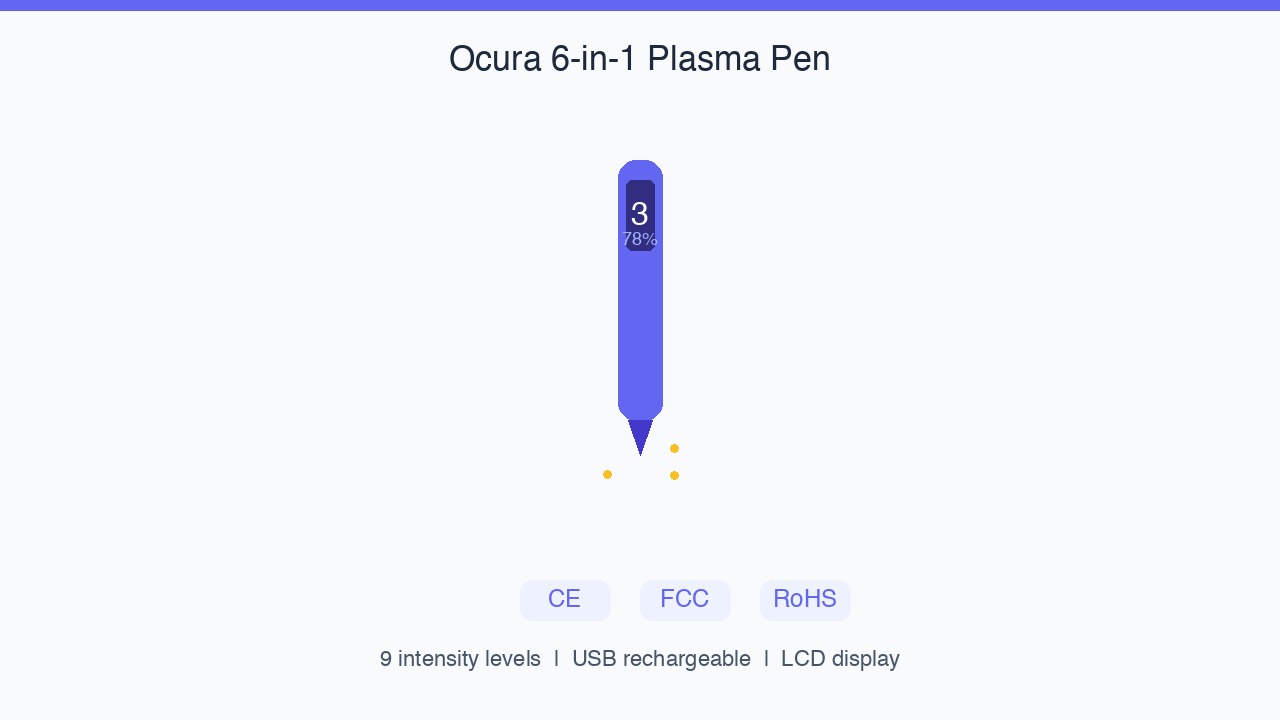
Ocuralife is a direct-to-consumer skincare device brand built around plasma (fibroblast) technology. Their flagship product is the Ocura 6-in-1 Plasma Pen — a rechargeable device with nine intensity levels, an LCD display showing power and battery status, and a set of interchangeable needle tips for different imperfections.
The “6-in-1” refers to the range of conditions it targets: skin tags, cherry angiomas, milia, DPN (dermatosis papulosa nigra), age spots, and sebaceous hyperplasia. It’s not six different devices — it’s one pen with different tip configurations and intensity settings for each concern.
The brand also sells supporting products: numbing cream, healing patches, SPF 50 sunscreen, recovery spray, and probiotic creams. You don’t need all of them, but the numbing cream + healing patches bundle is a practical add-on if you’re treating sensitive areas.
Current pricing:
– Ocura 6-in-1 Plasma Pen: $49.99 (regular compare price $165.00)
– Bundle with Numbing Cream + Healing Patches: $34.99 extra
– 30-Day Money-Back Guarantee | 1-Year Warranty
The Ocura Plasma Pen on the Ocuralife website regularly runs promotions — the $49.99 price is the active sale price as of 2026.
What’s in the Box
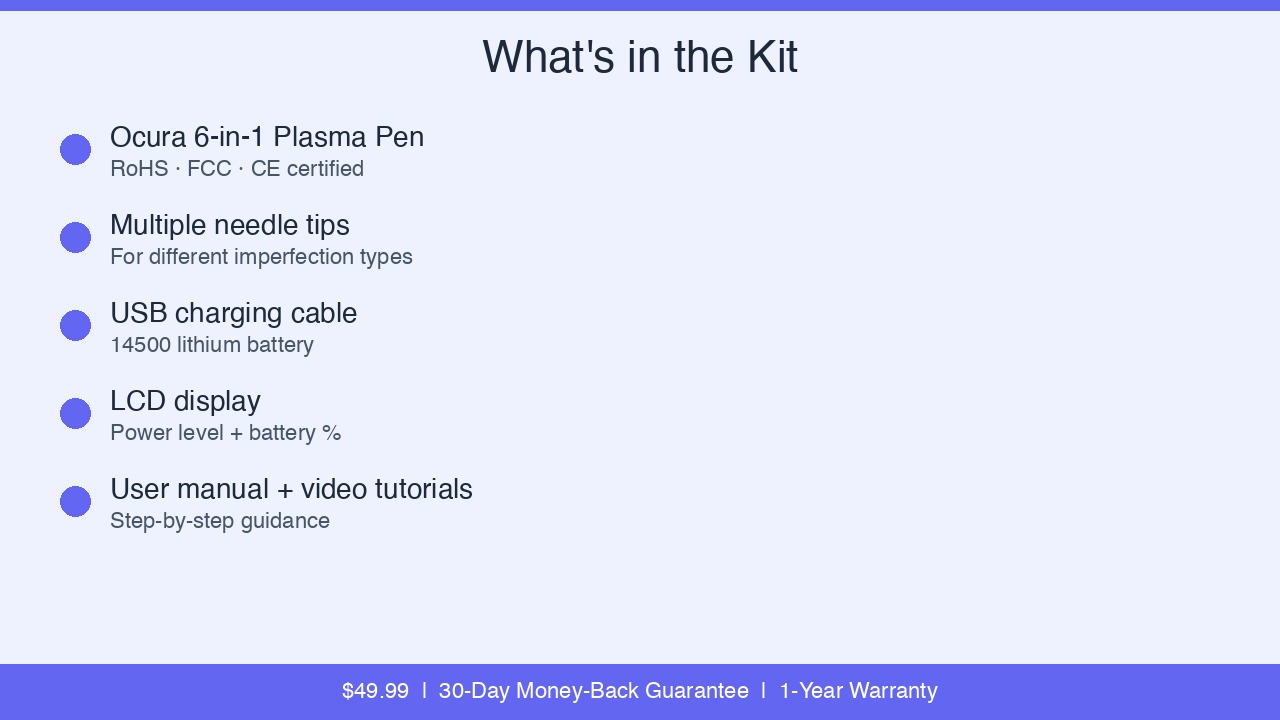
The base pen package includes:
- The Ocura plasma pen (13×2.5×2 cm, fiber plastic housing)
- Multiple needle tip sizes
- USB charging cable
- LCD display showing power level (1–9) and battery percentage
- User manual + access to video tutorials
The pen’s battery is a 14500 lithium cell (500mAh), rechargeable via USB. Certifications: CE, FCC, RoHS — which means the electronics have been evaluated for safety and electromagnetic compliance.
What’s not included in the base package: numbing cream, healing patches, or SPF sunscreen. These aren’t optional extras if you want to follow the protocol correctly — they’re standard aftercare. Factor them into your budget.
How the Technology Works
The pen generates a small electric arc between the tip and the skin’s surface. The tip never actually touches the skin — there’s a tiny gap, and the plasma arc bridges it. This creates a precise flash of heat that dehydrates the targeted tissue (a skin tag, milia, cherry angioma) without damaging the surrounding area.
The treated tissue dries out, forms a small crust, and sheds naturally over three to seven days. It’s the same fibroblast mechanism used in professional skin clinics — just calibrated for at-home use at lower intensity settings.
The Healing Timeline: Day by Day
This is the most misunderstood part of at-home plasma treatment. The “removal” isn’t instant:
Day 0 (treatment day): A tiny dark dot or mild redness appears where the pen contacted. The area may feel warm.
Days 1–3: A small scab or crust forms. This looks like a very small dark spot — it’s the dried, treated tissue. This is normal and expected.
Days 3–7: The scab naturally falls off. Underneath is pink, new skin. Do not pick. Picking is the most common cause of scarring.
Weeks 2–4: Skin color normalizes. SPF 50 every morning on the area is non-negotiable during this phase.
Month 2–3: Any residual pinkness or slight discoloration (more likely in darker skin tones) continues to fade.
Who It Works Best For
Based on the product specs, safety documentation, and customer feedback:
Best fit: Healthy adults 18+ with small, clearly benign, pedunculated skin tags on low-risk areas (neck, underarms, torso, upper back). People who are willing to follow a patch-test-first, aftercare-always protocol.
Marginal fit: People with more complex skin tag types (larger, sessile/flat-based tags may need multiple sessions), those with sensitive skin who need to start at intensity level 1.
Not the right product for: Anyone in Ocuralife’s contraindicated list — which is extensive and worth reading. If you have a pacemaker, are on blood thinners, are pregnant, or have active skin conditions like eczema or rosacea, skip this product. See the full contraindication list on Ocuralife’s safety page.
What Customers Are Actually Saying
With 433+ verified reviews and an average of 4.87/5 stars, the Ocura Pen has a notably high satisfaction rate for a device in this category. Common themes:
What works well:
– Small, flat skin tags and milia respond quickly (often single treatment)
– The LCD display makes it easy to start low and adjust
– The numbing cream takes most of the sting out
– The device charges quickly via USB
What requires patience:
– The scabbing phase (days 1–5) looks worse before it looks better — users who didn’t expect this are more likely to leave negative reviews
– Larger or raised skin tags sometimes need a second pass after full healing
– Aftercare compliance is the variable that most determines the final cosmetic result
Common complaints:
– The device occasionally sold out (availability fluctuates)
– Some users wanted more detailed video tutorial content for first-timers
Verdict: Is Ocuralife Worth It?
For the right candidate — a healthy adult with benign skin tags in treatable areas who’s willing to patch test and follow aftercare — yes, it’s worth it.
The math is simple: a single dermatologist cryotherapy session for cosmetic skin tags costs $150–$400 and isn’t covered by insurance. The Ocura Pen costs $49.99 and can be used repeatedly over years. The technology is the same. The risk difference is real (a professional has more experience) but manageable for surface-level, clearly benign tags when you follow instructions carefully.
The 30-day money-back guarantee also meaningfully reduces the financial risk.
What it isn’t: a substitute for a dermatologist if you have any doubt about what you’re treating. Any spot that’s changed in color, size, or border shape should be evaluated by a professional before you point any device at it.
For a complete step-by-step use guide, see how to use a plasma pen safely at home.
For context on the broader technology and cost comparisons, see our plasma pen skin tags guide.
Frequently Asked Questions
Is Ocuralife a real company?
Yes. Ocuralife is a direct-to-consumer brand with a published safety protocol, CE/FCC/RoHS-certified devices, 28,000+ customers, and a verifiable product history. They offer a 30-day money-back guarantee and 1-year warranty.
Can I use the Ocura pen on my face?
The pen is designed for cosmetic use on benign imperfections. Most people avoid facial use unless they’re treating a specific condition (like milia or a small cherry angioma) in a non-sensitive area. Do not treat near the eyes, lips, or on active acne breakouts.
What intensity setting should I start at?
Ocuralife’s protocol is to start at the lowest effective intensity — typically level 1 or 2 for small, thin skin tags. You can increase if the treatment isn’t working, but you can’t undo a setting that’s too high. The LCD makes this easy to track.
How long does the pen last?
The device is built for long-term use. Needle tips need periodic replacement (Ocuralife sells tip sets separately). With normal use, the rechargeable battery should retain charge capacity for hundreds of sessions.
Can I use it on skin tags in my armpits?
Yes, the underarm is one of the most common skin tag locations and is generally suitable for at-home plasma treatment. Make sure the area is clean and dry before treating.
Does the skin tag come back after treatment?
If the treatment fully dehydrates the tag tissue, it doesn’t regrow. New skin tags can form elsewhere over time (they’re partly genetic), but a properly treated tag doesn’t return.
Affiliate disclosure: This article contains affiliate links. We may earn a commission at no extra cost to you if you purchase through our links.
Recommended for you
 Best Ceramide Moisturizer Under $30: K-Beauty Picks That Outperform Luxury Brands
 Haruharu Wonder Review: The K-Beauty Brand That Strips Skincare Back to Basics
 Haruharu Wonder Ceramide Cream Review: K-Beauty’s Best $24 Pick?
 Best Men’s Hair Clay 2026: Which Formulas Actually Hold Without Crunch?
 Who Is Elijah Matt Clay: Is This Barber-Origin Formula Worth 28 Euros?
 Who Is Elijah Review: The Best Matt Clay and Cologne for Men 2026